Oxygonum tenerum
Selected images: Click on each image to see a larger version and details of the record View all images (7)
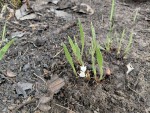
Habit
Open wooded grassland plain margin
Mwinilunga District
Nov 2025
Photo: Nick Wightman
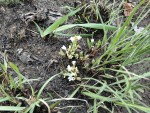
Habit
Open wooded grassland plain margin
Mwinilunga District
Nov 2025
Photo: Nick Wightman
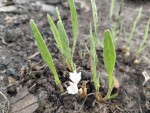
Leaves
Open wooded grassland plain margin
Mwinilunga District
Nov 2025
Photo: Nick Wightman
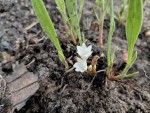
Flowers
Open wooded grassland plain margin
Mwinilunga District
Nov 2025
Photo: Nick Wightman
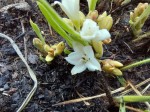
Flowers
Open wooded grassland plain margin
Mwinilunga District
Nov 2025
Photo: Nick Wightman
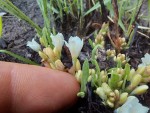
Flowers
Open wooded grassland plain margin
Mwinilunga District
Nov 2025
Photo: Nick Wightman
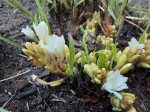
Flowers
Open wooded grassland plain margin
Mwinilunga District
Nov 2025
Photo: Nick Wightman
Detailed records: Display species records QDS maps by: Google Maps Point records by Google Maps
Species details: Click on each item to see an explanation of that item (Note: opens a new window)
| Synonyms: | |
| Common names: | |
| Frequency: | Local |
| Status: | Native |
| Description: |
A perennial herb with a woody rootstock creeping underground. Ocrea 10–12 mm long, chartaceous, truncate and fringed at the apex with light brown setae 5–10 mm long. Leaves dark green to yellowish when dry, sessile, 45-50 × 0.75-1 mm, linear-lanceolate to needle-shaped, acute and apiculate at the apex, narrowly cuneate to the base, revolute on the margin. Flowering shoots annual, many, 8-10 cm long, leafless, arising from the rootstock; lateral shoots leafy, arising from the axils of ocreiform cataphylls of the flowering shoots. Flowers pedicellate, 3-4 in the axils of bracts, arranged in terminal spiciform racemes up to 30 cm long; bracts up to 6 mm long, truncate, produced dorsally into an acute or acuminate setose apex with a terminal fringe of 2-3 setae; pedicels up to 7 mm long, filiform. Hermaphrodite flowers heterostylous, long-styled flowers not seen; perianth 4–5-lobed; tube c. 4 mm long; lobes white to rose, c. 6 mm long, oblong-lanceolate. Male flowers not seen. Filaments c. 1-2 mm long, filiform and flattened to the base; anthers brownish-rose, c. 1 mm long. Ovary c. 1 mm long; styles of the long-styled flowers c. 3.5 mm long; styles of the short-styled flowers c. 1 mm long. Nut yellowish-brown, 7 × 4 mm, ovoid, trigonous. |
| Type location: |
Zambia |
| Notes: | |
| Derivation of specific name: | tenerum: soft, delicate, tender |
| Habitat: | Edge of sandy flood plains in Kalahari Sand, after early burning, growing on burnt ground and sandy soils in open situations |
| Altitude range: (metres) | 1350 - 1450 m |
| Flowering time: | Oct - Nov |
| Worldwide distribution: | DRC and Zambia |
| FZ divisions: | W |
| Zambian distribution (Provinces): | Nw |
| Growth form(s): | Perennial. |
| Endemic status: | Near Endemic |
| Red data list status: | |
| Insects associated with this species: | |
| Spot characters: | Display spot characters for this species |
| Images last updated: | Monday 30 March 2026 |
| Literature: |
Nogueira, I., Ortiz, S. & Paiva, J.A.R. (2006). Polygonaceae Flora Zambesiaca 9(3) Pages 28 - 29. |
Other sources of information about Oxygonum tenerum:
External websites:
African Plants: A Photo Guide (Senckenberg): Oxygonum tenerumAfrican Plant Database: Oxygonum tenerum
BHL (Biodiversity Heritage Library): Oxygonum tenerum
EOL (Encyclopedia of Life): Oxygonum tenerum
GBIF (Global Biodiversity Information Facility): Oxygonum tenerum
Google: Web - Images - Scholar
iNaturalist: Oxygonum tenerum
IPNI (International Plant Names Index): Oxygonum tenerum
JSTOR Plant Science: Oxygonum tenerum
Mansfeld World Database of Agricultural and Horticultural Crops: Oxygonum tenerum
Plants of the World Online: Oxygonum tenerum
Tropicos: Oxygonum tenerum
Wikipedia: Oxygonum tenerum