Hibiscus migeodii
All images: Click on each image to see a larger version and details of the record View selected images
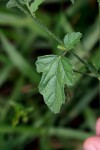
Photo: Mark Hyde
Via Entrada, Catapu
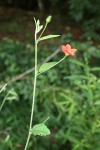
Photo: Mark Hyde
Via Entrada, Catapu
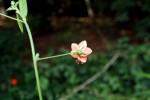
Photo: Mark Hyde
Via Entrada, Catapu
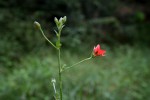
Photo: Mark Hyde
Via Entrada, Catapu
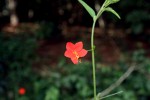
Photo: Mark Hyde
Via Entrada, Catapu
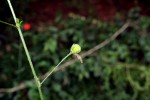
Photo: Mark Hyde
Via Entrada, Catapu
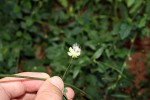
Photo: Mark Hyde
Via Entrada, Catapu
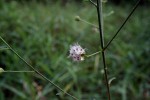
Photo: Mark Hyde
Via Entrada, Catapu
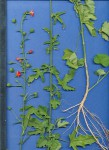
Photo: Sune Holt
Vilankulo, Inhambane, Mozambique
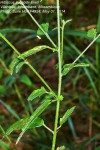
Photo: Sune Holt
Vilankulo, Inhambane, Mozambique
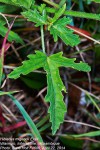
Photo: Sune Holt
Vilankulo, Inhambane, Mozambique
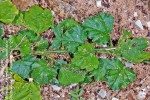
Photo: Sune Holt
Vilankulo, Inhambane, Mozambique
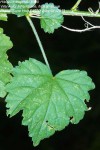
Photo: Sune Holt
Vilankulo, Inhambane, Mozambique
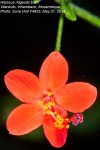
Photo: Sune Holt
Vilankulo, Inhambane, Mozambique
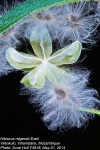
Photo: Sune Holt
Vilankulo, Inhambane, Mozambique
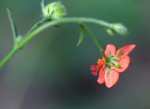
Photo: Bart Wursten
Catapu, Sofala.
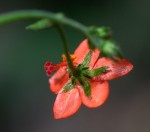
Photo: Bart Wursten
Catapu, Sofala.
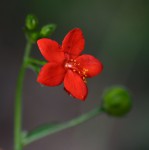
Photo: Bart Wursten
Catapu, Sofala.
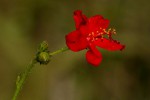
Photo: Bart Wursten
Plateau above Nhagutua Gorge, Gorongosa National Park, Cheringoma
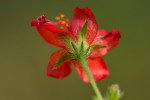
Photo: Bart Wursten
Plateau above Nhagutua Gorge, Gorongosa National Park, Cheringoma
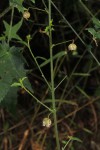
Photo: Bart Wursten
Inhamitanga Forest, Marrumeo
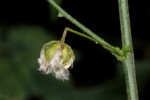
Photo: Bart Wursten
Inhamitanga Forest, Marrumeo
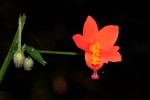
Photo: Bart Wursten
Inhamitanga Forest, Marrumeo
Detailed records: Display species records QDS maps by: Google Maps Point records by Google Maps
Species details: Click on each item to see an explanation of that item (Note: opens a new window)
| Synonyms: | |
| Common names: | |
| Frequency: | |
| Status: | Native |
| Description: |
Annual or perennial herb, up to 1 m high. Leaves: lamina up to 7 × 5 cm, broadly ovate to narrowly oblong, sometimes hastate, tending to become shallowly or deeply 3-lobed with stellate hairs on both surfaces; base rounded to cordate; apex acute; margin with irregular blunt teeth. Stipules 2-4 mm long,setaceous. Flowers solitary, axillary, up to 1.5 cm in diameter, red. Epicalyx of 6-7 linear bracts 2-3 mm long. Calyx 6 mm long; lobes 4-5 mm long, lanceolate. Petals 8-9 mm long, obovate. Staminal tube 4-4.5 mm long. Capsule subspherical, pubescent. Seeds with a white cottony floss. |
| Type location: |
Tanzania |
| Notes: | This species is generally very similar to Hibiscus allenii. It can only be reliably distinguished by the seeds which are covered in long silky or cotton-like hairs, while being hairless in H. allenii. |
| Derivation of specific name: | |
| Habitat: | Open woodland and on roadsides |
| Altitude range: (metres) | |
| Flowering time: | |
| Worldwide distribution: | Tanzania, Zambia, Malawi and Mozambique |
| FZ divisions: | N |
| Zambian distribution (Provinces): | |
| Growth form(s): | |
| Endemic status: | |
| Red data list status: | |
| Insects associated with this species: | |
| Spot characters: | Display spot characters for this species |
| Images last updated: | Sunday 16 March 2014 |
| Literature: |
Exell, A.W. (1961). Malvaceae Flora Zambesiaca 1(2) Pages 453 - 454. |
Other sources of information about Hibiscus migeodii:
Our websites:
Flora of Malawi: Hibiscus migeodiiFlora of Mozambique: Hibiscus migeodii
External websites:
African Plants: A Photo Guide (Senckenberg): Hibiscus migeodiiAfrican Plant Database: Hibiscus migeodii
BHL (Biodiversity Heritage Library): Hibiscus migeodii
EOL (Encyclopedia of Life): Hibiscus migeodii
GBIF (Global Biodiversity Information Facility): Hibiscus migeodii
Google: Web - Images - Scholar
iNaturalist: Hibiscus migeodii
IPNI (International Plant Names Index): Hibiscus migeodii
JSTOR Plant Science: Hibiscus migeodii
Mansfeld World Database of Agricultural and Horticultural Crops: Hibiscus migeodii
Plants of the World Online: Hibiscus migeodii
Tropicos: Hibiscus migeodii
Wikipedia: Hibiscus migeodii